
INTERVIEW: From New Haven to Washington D.C. : Grandson of Connecticut Architect Who Renovated the White House Responds to East Wing Demolition
Douglas Orr Logan, of Stony Creek, CT — named after his prolific architect Grandfather Douglas Orr (1892 - 1966) spoke to The Connecticut Native about what his Grandfather might have thought.

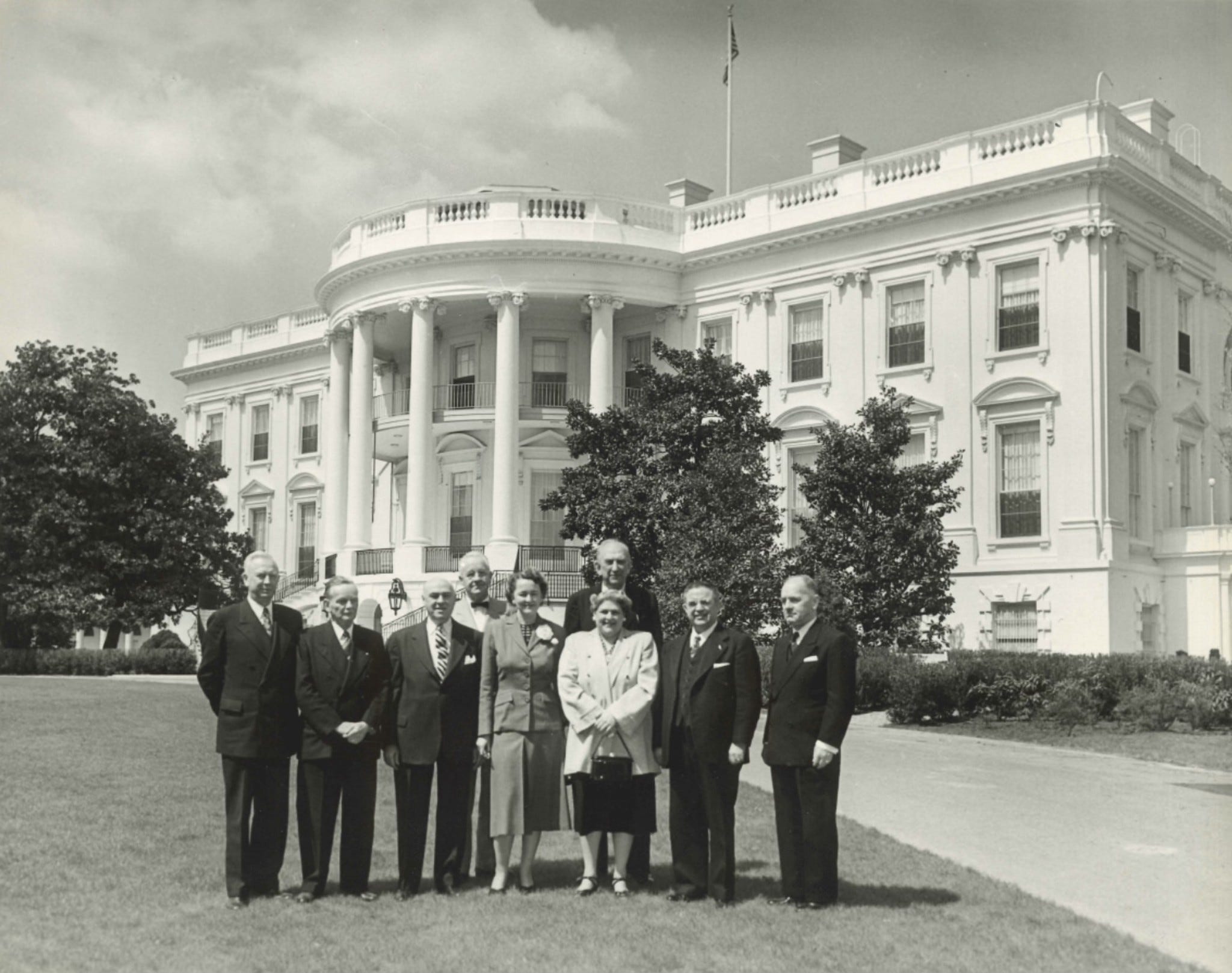
Preservation, Memory, and a Bulldozed Promise
The White House has been rebuilt before. It has also come close to being erased. In 1949, that erasure was avoided because a New Haven, Connecticut architect refused to treat history as disposable. Today, in the wake of the sudden demolition of the East Wing, the question returns: who decides what parts of our national story survive?
Douglas Orr (1892 -1966) of New Haven, president of the American Institute of Architects at the time, served on the federal advisory commission that guided the massive post-war rehabilitation of the Executive Mansion. Congress considered razing the White House outright. Orr argued to preserve the shell, reinforce it with modern structure, and return as many original materials as possible. It was not nostalgia. It was civic duty.
His grandson, writer and Connecticut native Douglas Orr Logan, carries not just his names but those memories.
His vantage point is not academic theory, but lived proximity. Childhood days in Stony Creek. Evenings in a house Orr designed himself. Watercolors from his grandfather’s study in Europe. And a direct lineage to one of the most consequential preservation decisions in presidential history.
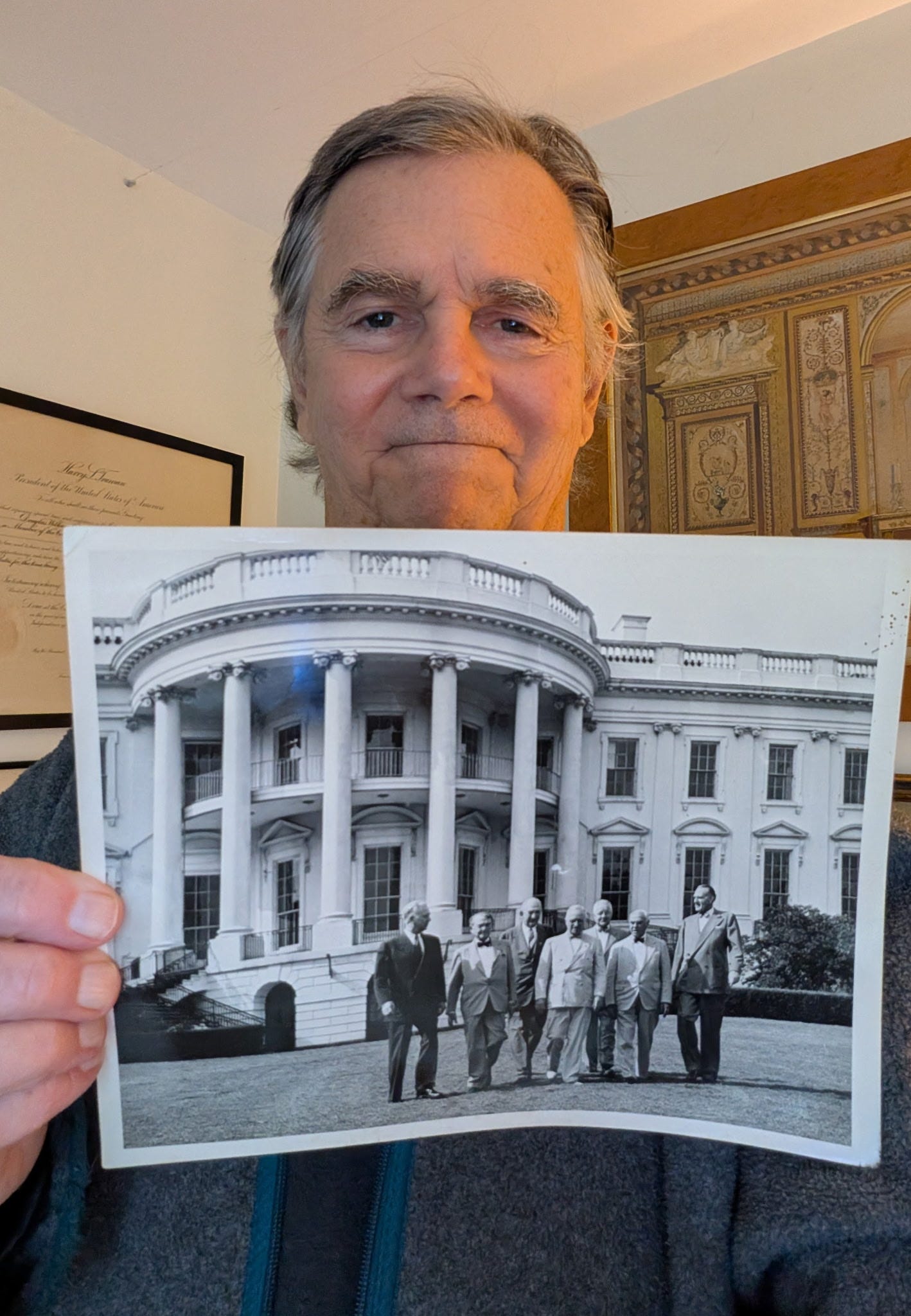
The East Wing is now rubble but this interview exists in its place.
A Connecticut Legacy in Preservation
Logan does not posture as an architectural historian. He speaks plainly.
“He felt very strongly about preserving it as a historical and iconic building.”
Orr did not win that position because of sentiment. He won it because he chaired the national body representing American architects. He had the engineers behind him. He understood that modernization and protection did not require destruction.
That is what preservation means: technical competence and restraint, not worship of the past.
Logan’s memory is not of a man reciting doctrine, but of an older architect still going into his Whitney Avenue office in New Haven, still obsessed with materials, shapes, rockets, steel, and underwater exploration.
“He loved the technology of the twentieth century… NASA, Jacques Cousteau, the idea of space flight and under-ocean exploration.”
The rebuilder of America’s house was not an antiquarian. He was a modernist who understood precedent.
“Middle of the Night Job”
The conversation turns to the present East Wing demolition. Logan does not indulge in emotional theatrics. His reaction is measured, and that restraint gives the words weight.
“We were told the East Wing wasn’t going to be disturbed… There was no due diligence through the usual historic preservation channels… It was a middle-of-the-night job.”
The key charge is not taste. It is process. Governance, not nostalgia.
A structure need not be centuries old to matter. Logan notes that the East Wing, despite relative youth, had accrued historical and symbolic weight, connected to White House daily life, presidential families, and the Jacqueline Kennedy garden era.
Removing it without transparent review did not honor the house’s continuum.
“It doesn’t honor the past residents or their efforts.”
This is not partisan sloganeering. It is a civic diagnosis: institutions function only when precedent and stewardship are real.
The Commission Fired
Shortly after the demolition, the six-member U.S. Commission of Fine Arts was dismissed. Orr served as its vice chair from 1955 to 1963. He understood its role. It exists to guard the built symbols of the nation from haste and ego.
Logan again stays tight to verifiable ground.
“I imagine they reacted negatively… typically this administration fires those who disagree… but I would need the facts.”
He does not speculate. He emphasizes accuracy and record.
That is the ethic inherited from Orr: build, but document; argue, but substantiate; protect form through process.
Connecticut, Memory, and the House That Endures
Logan does not mythologize Connecticut. He simply states why he has not left.
“I have a lot of strong feelings about Connecticut as a state. My family’s been here a very long time. I can’t seem to leave. I believe in the place.”
He remembers Orr not as a statue but as a grandfather sharing sketchbooks, carving balsa, traveling with his grandson, and insisting that real creation begins with understanding materials. Steel, concrete, glass, water, light.
The people who purchased the Orr-designed house in Stony Creek restored it to his exact vision. Not because anyone forced them. Because they recognized what they had inherited.
Stewardship is not ideology. It is obligation.
The Lesson
Orr’s legacy was not aesthetic. It was procedural. He preserved the White House not by sentiment, but by argument, engineering logic, institutional respect, and professional duty. That duty was not fashionable. It was structural.
Preservation is not backward-looking. It is future-protecting. It says: a country that treats its symbols as disposable will treat its principles the same way.
This demolition was avoidable. It was rushed. It bypassed scrutiny. It diminished the institution’s memory. That is the point.
Orr believed the nation deserved better.
Logan’s calm indictment stands on that foundation.